We interact with everyday products constantly—calendars, mugs, notebooks, packaging, apparel. Most of them serve a clear function, but rarely do they make us pause, feel, or connect. This is where art changes everything. When artistic thinking is applied to functional objects, they transform from something we simply use into something we experience.
As a designer and artist, I’ve always believed that art should not remain confined to frames. It should live with us, become part of our routines, and quietly enrich our everyday moments. One of my most personal examples of this philosophy is my travel-themed illustrated table calendar.
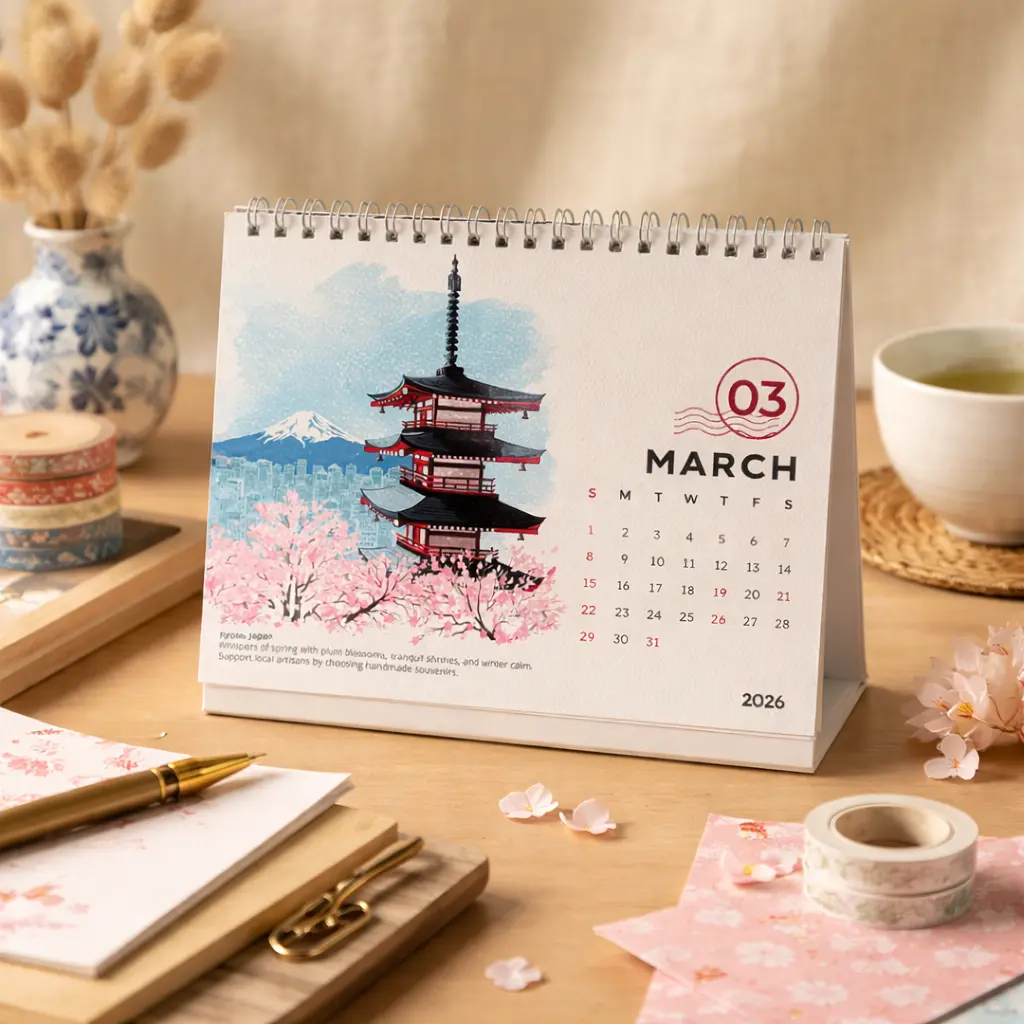
Started with the Art
The journey began not with the intention to design a calendar, but with my landscape sketches.
During my travels, I created a series of digital landscape illustrations inspired by the places I visited. These were not commissioned pieces or client work. They were personal observations—light falling on buildings, the quiet charm of streets, architectural details, and the feeling of being present in a new place.
Each illustration captured a moment and an emotion. At this stage, they existed purely as artworks, without any commercial purpose.
Finding a Deeper Purpose
Later, I began thinking about how these artworks could live beyond my screen. I didn’t want to simply print them as decorative images. I wanted them to serve a purpose in people’s daily lives.
This is when the idea of a table calendar emerged.
A calendar is something people interact with every single day. It sits on your desk, becomes part of your workspace, and quietly accompanies your routine throughout the year.
By integrating my travel illustrations into a calendar, the artwork could become part of someone’s everyday environment instead of remaining hidden in a folder.
Building a Meaningful Theme
Rather than placing random illustrations across months, I developed a cohesive theme—travel.
Each month featured a different destination illustration, allowing the user to visually journey through the year.
This created anticipation.
The calendar was no longer just about dates. It became about exploration, inspiration, and imagination.
It allowed the user to:
- Feel inspired by new places
- Experience visual change every month
- Build an emotional connection with the object
Art gave the product a story.
Adding Value Through Sustainable Living Tips
I wanted to take the concept further.
Since travel and sustainability are closely connected today, I used the reverse side of each calendar page to share simple sustainable travel tips.
These included ideas like:
- Carrying reusable essentials
- Supporting local businesses
- Reducing plastic waste while travelling
- Being mindful of environmental impact
This transformed the calendar into something more than visual enjoyment. It became informative and thoughtful.
Now the object had three layers:
- Function (calendar)
- Art (illustrations)
- Purpose (sustainable awareness)
This is where art truly elevates design.
Extending the Life of the Artwork
Another important part of the process was designing the layouts in a way that allowed the illustrations to be preserved even after the month was over.
The artwork wasn’t treated as temporary.
It was treated as something worth keeping.
Users could:
- Preserve the pages
- Frame the illustrations
- Reuse them as art prints
This extended the life of both the artwork and the product.
Emotional Connection Creates Lasting Value
When art becomes part of an everyday product, something important happens.
The object gains emotional value.
It is no longer replaceable.
A mass-produced calendar is easily discarded. But an illustrated calendar connected to memories, travel, and meaningful ideas becomes something people want to keep.
This is the difference between decoration and design with intent.
Why This Matters Today
In a world full of mass-produced products, people are increasingly drawn to objects that feel personal, thoughtful, and human.
Art brings:
- Originality
- Story
- Identity
- Emotional connection
It transforms ordinary products into meaningful experiences.
For designers, artists, and brands, this approach creates deeper engagement.
For users, it creates joy in everyday life.
Conclusion
My illustrated travel calendar began as a collection of personal landscape sketches. Through thoughtful design and purpose-driven thinking, it evolved into a functional object that combines art, storytelling, and sustainability.
This process reinforced something I strongly believe:
Art does not have to remain separate from daily life. It can live with us, serve us, and remind us of beauty even in the simplest routines.
When art meets function, everyday products stop being ordinary.
They become meaningful.